
Advanced
Process
Services
Keeping the Process Flowing
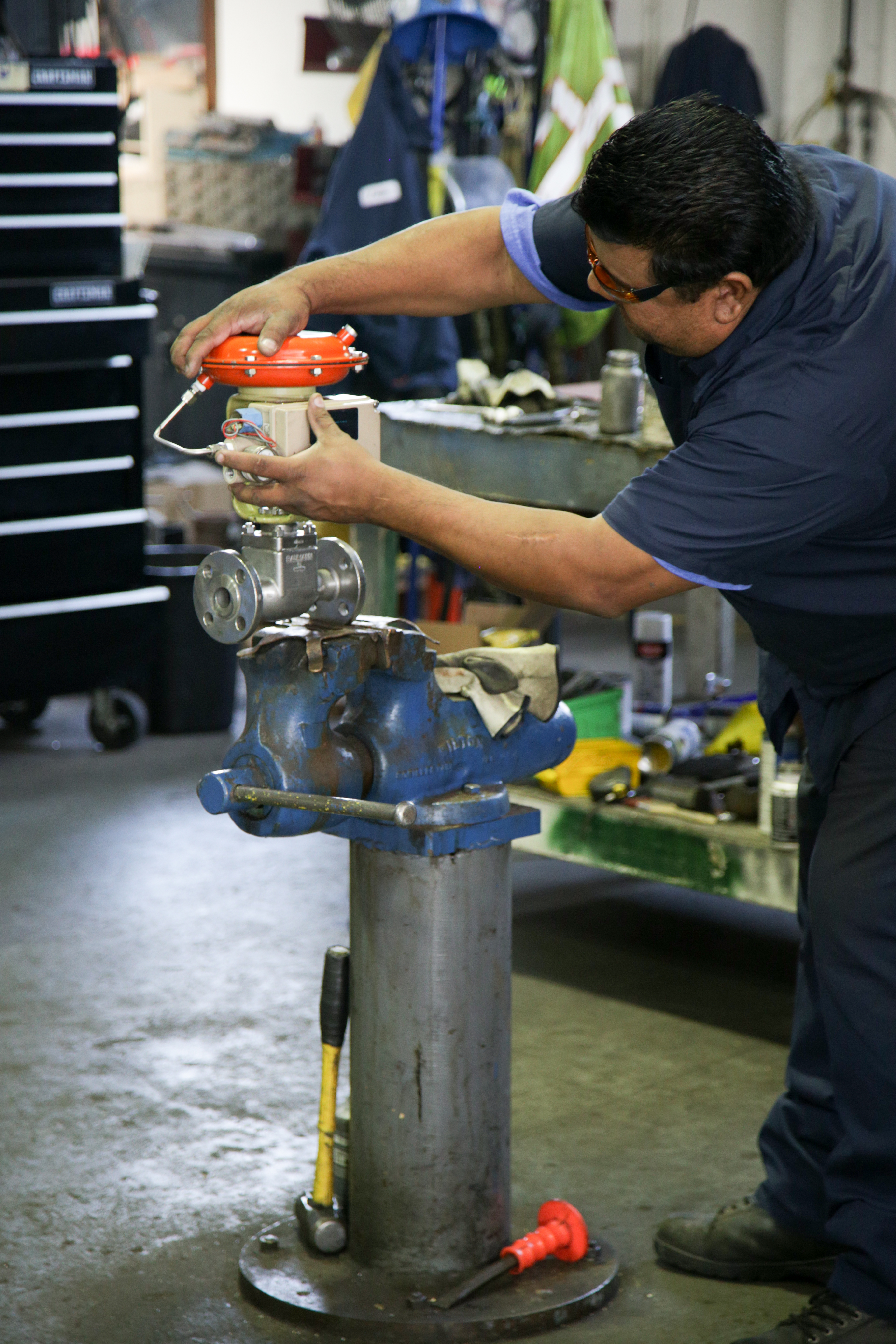
Advanced Process Services specializes in repairing, rebuilding, and upgrading industrial valves and process control equipment, fast. With over 45 years of hands-on experience, we help refineries, power plants, chemical plants, and aerospace facilities reduce downtime, cut replacement costs, and keep their operations running safely and reliably.
Emergency valve repair and rebuilds in days or hours
Up to 50% cost savings versus buying new valves
In-house machine shop, weld shop, PMI testing, and other processes.
Proven results with major names like Valero, Phillips 66, Marathon, Parker Hannifin, Kinder Morgan, and Aerospace sub-contractors.
The Problem:
Downtime You Can’t Afford
In process industries, a single failed valve or control component can stall an entire unit.
Manufacturers may quote 6–8 weeks or more to deliver a replacement part, if the part is even still in production. That means lost production, safety risks, and a lot of frustrated people on the plant floor.
Our Solution:
Expert Repairs, Fast Turnaround
Advanced Process Services was built to solve that exact problem.
Instead of waiting months for OEM parts, we repair or remanufacture your components in-house, often in just a few days — and in true emergencies, we’ve turned valves around in as little as four hours.
Who We Work With














Frequently Asked Questions
Common Questions Answered for your convenience.
What does Advanced Process Services do?
We specialize in repairing, rebuilding, and upgrading industrial valves, actuators, and process control equipment. Instead of waiting weeks or months for new OEM parts, we restore and improve your existing equipment using our in-house machine shop, weld shop, PMI testing, and advanced surface treatments.
Which industries do you serve?
Our clients include refineries, petrochemical and chemical plants, power plants (including geothermal), pipelines and fuel distribution firms, industrial gas companies, food processing facilities, pharmaceutical operations, and aerospace/test facilities. We’ve worked with companies like Valero, Phillips 66, Marathon, Kinder Morgan, Parker Hannifin, Honeywell, Matheson Gas, and others across the U.S.
How do you improve valve performance beyond basic repair?
We look beyond simply restoring a valve to its original condition. APS evaluates the actual service conditions — pressure, temperature, chemistry, and abrasion — and upgrades materials, surfaces, and internal designs when needed. This includes using better alloys, hardfacing, sleeves, and surface treatments so the valve lasts longer, seals better, and performs more reliably in its real operating environment.
Can you help when parts are obsolete or discontinued?
Yes. This is one of the main reasons customers come to us. We can clone existing components in our machine shop, repair worn parts, upgrade materials, and bring legacy valves and devices back into service even when manufacturers no longer support them.
Where are you located and what regions do you serve?
We’re based in Commerce, California, and regularly serve clients across Southern California, as well as other parts of the United States. Valves are shipped to us from places like Nevada, Arizona, New Mexico, Hawaii, and beyond.
What kinds of valves and equipment can you work on?
We work on a wide range of equipment, including globe valves, ball valves, butterfly valves, gate valves (as block valves), check valves, relief valves, actuators (pneumatic, hydraulic, and electric), vapor recovery valves, flame arrestors, and more. We also repair gearboxes and can fabricate new gears when originals are worn or obsolete.
How fast can you turn around a repair?
Typical repairs take from a few days to a couple of weeks, depending on complexity and scope. For critical situations, we’re set up to respond quickly — we’ve turned valves around in as little as four hours when a process was down and time was critical.
How does your pricing compare to buying new valves?
In many cases, we can rebuild a valve and provide a one-year warranty for about half the cost of a new valve. It only makes sense to go beyond that — up to maybe 60–70% of new — when a new valve is unavailable for an extended period (for example, a year-long lead time) or when your schedule can’t wait for OEM delivery.
Do you only work in your shop, or can you come on-site?
We do both. Our fully equipped shop handles major rebuilds and complex machining, and we also have a mobile trailer for on-site work, turnaround support, and smaller instrumentation jobs. For very large valves or extensive work, we typically bring them back to the shop for full repair and testing.
How do you ensure you’re using the correct materials?
We use a Positive Material Identification (PMI) device to verify the exact alloy of trims and components. Manufacturers sometimes use cost-driven material choices that don’t hold up in certain services (like H₂S). We analyze the actual material and process conditions, then recommend and install materials that will perform better over the long term.
Contact Us
(323) 278-6530
4350 E. Washington BLVD., Commerce California 90023